Find your next filling
Try classic SPAM, teriyaki chicken, or tofu musubi with measured ingredients and clear instructions.
Explore musubi recipes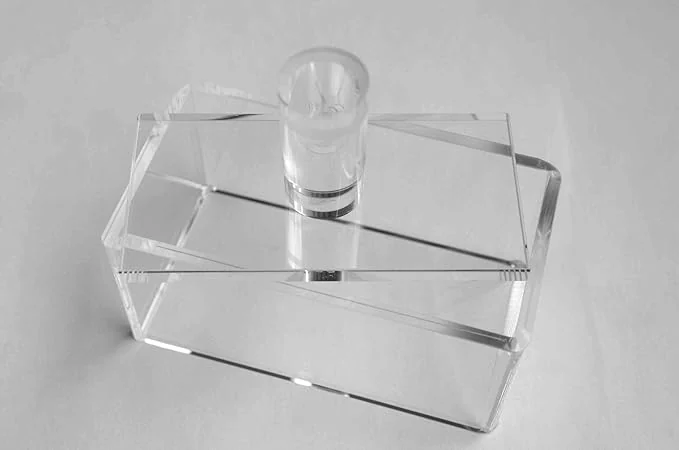
Make it. Press it. Wrap it.
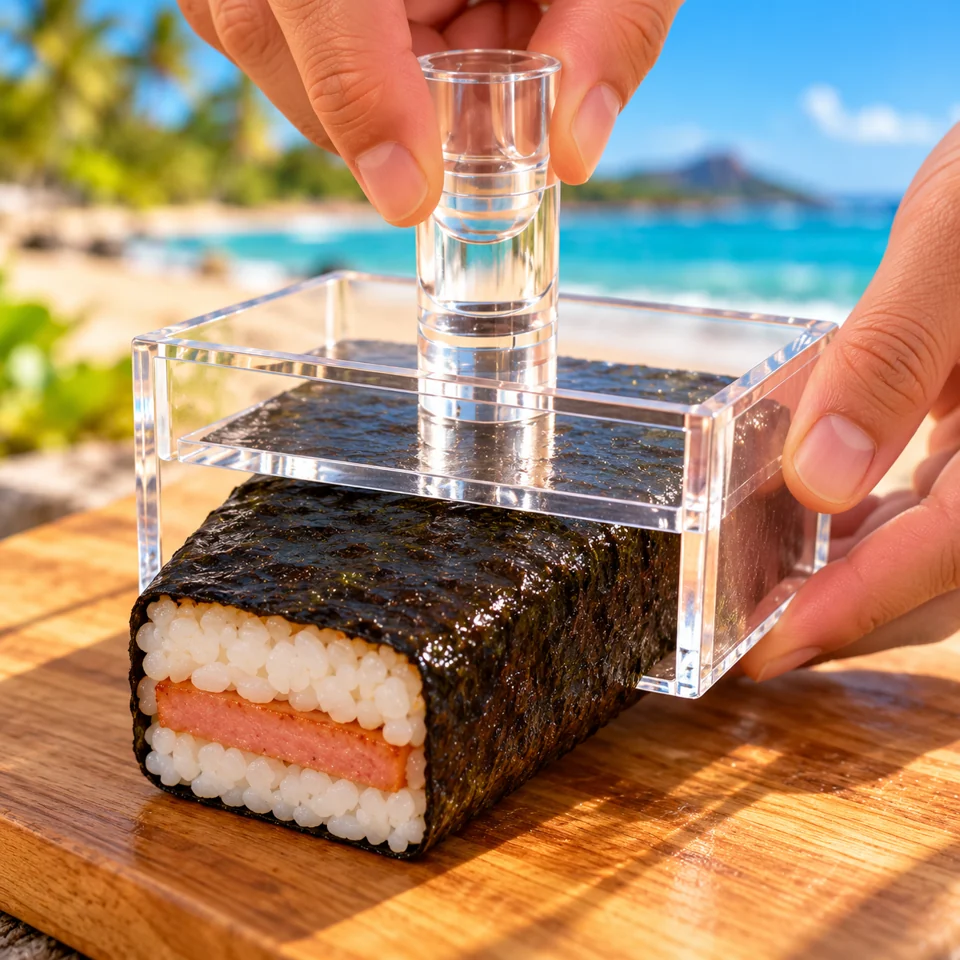
Your favorite musubi, made at home. See every layer as you shape rice with this clear acrylic mold and press.
Get it on amazonCheck current price and availability.
Affiliate links: we may earn a commission from purchases. Affiliate disclosure.
Know your press
Check the listing for included pieces, care instructions, and temperature limits before ordering.
Compare acrylic, stainless steel, and batch molds · Read use and care answers
See what your press can make
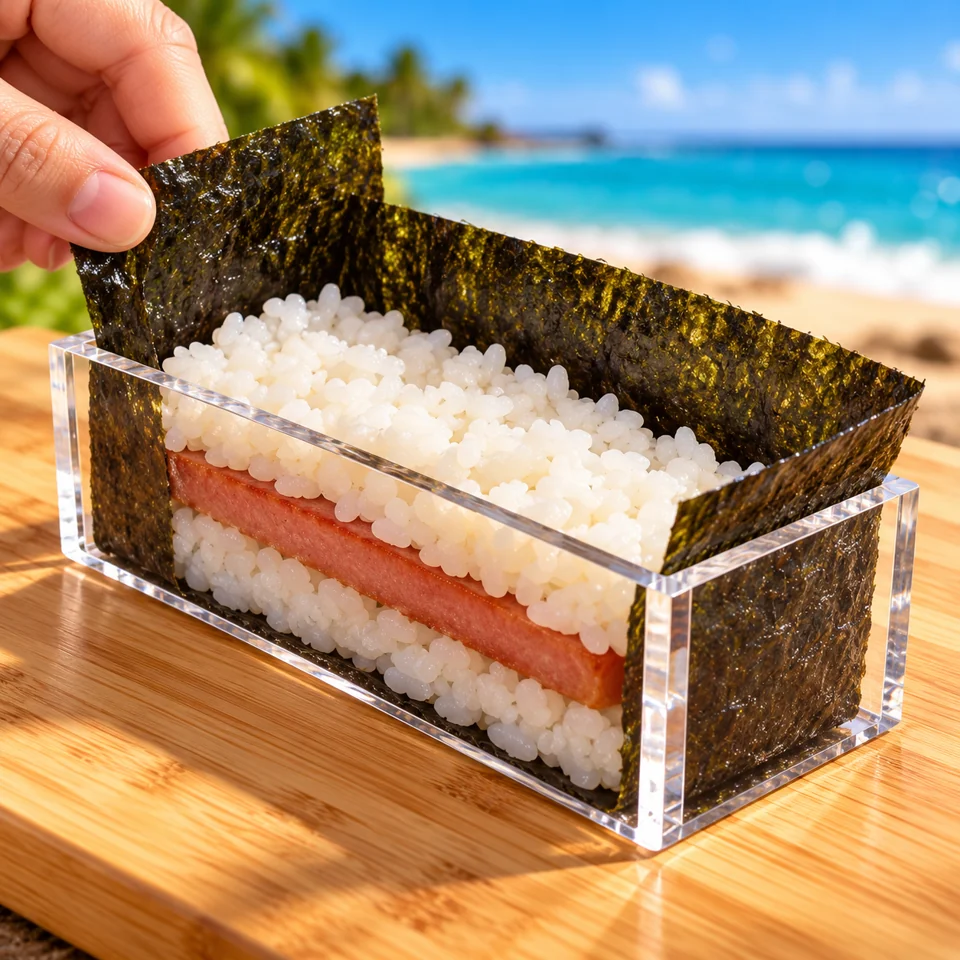
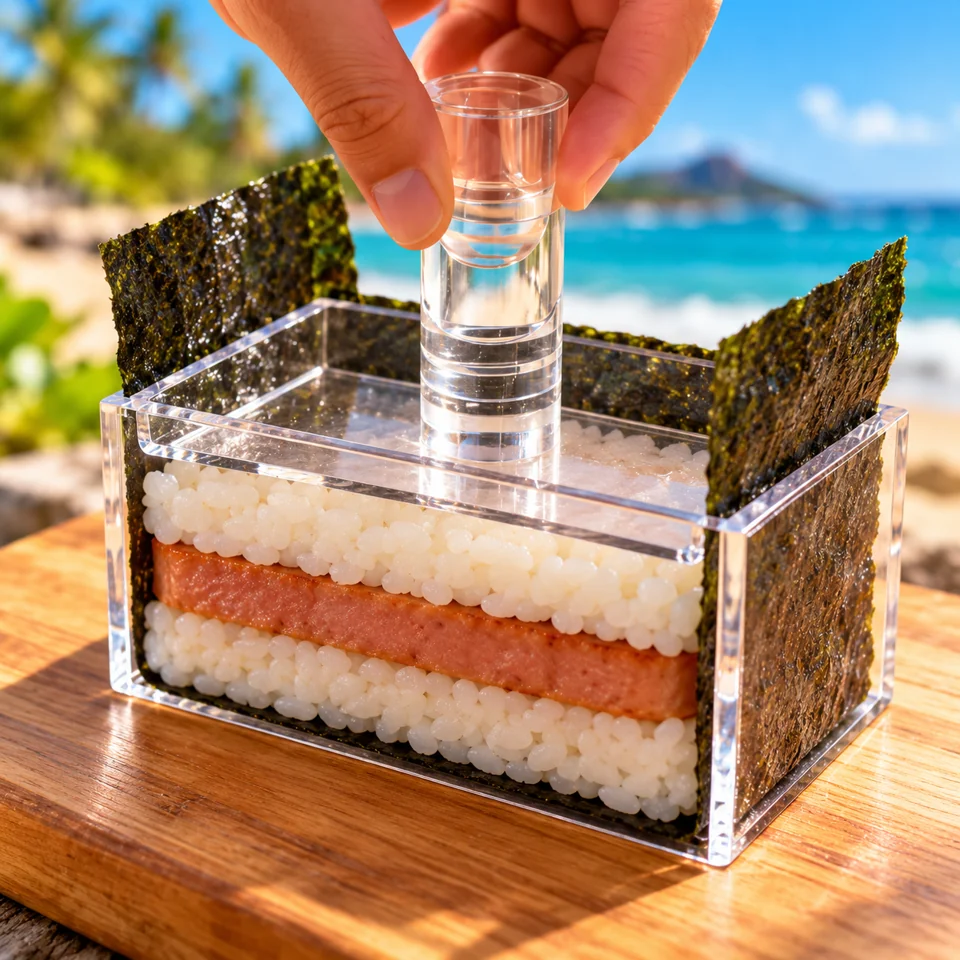
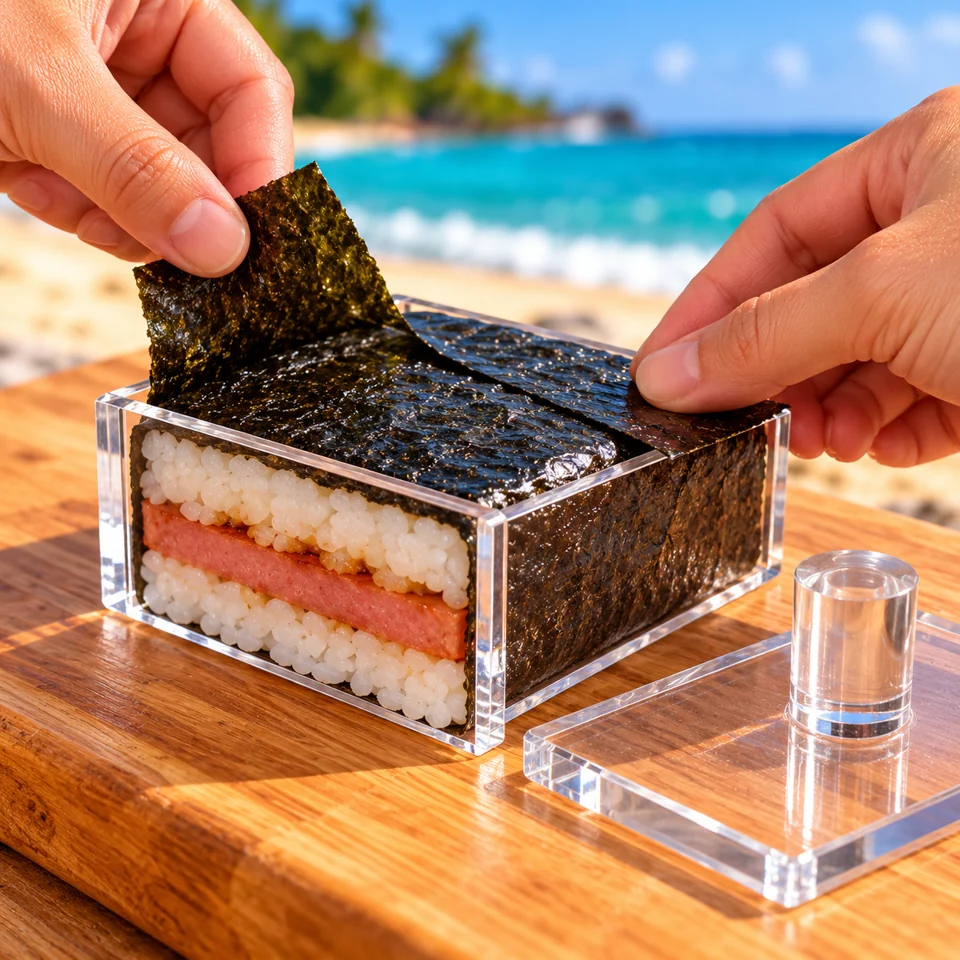
Illustrated assembly method: line the inside with a broad lengthwise nori wrap, fill and press, wrap the top inside the mold, then push through with the plunger. See the product photo above for the featured press.
From rice to ready
A simple routine for your next batch.
Place a broad nori sheet inside the mold so it covers the full length of the bottom and both long sides, with the free flaps above the rim. Add even layers of warm cooked rice, prepared filling, and the remaining rice.
Press the ingredient layers evenly with the plunger, then remove the plunger while leaving the musubi inside the mold.
Fold the broad nori flaps over the entire top of the ingredient layers while the musubi is still inside the mold. Overlap the edges so the nori encloses the full length of the layered block.
Place the plunger on the wrapped musubi to hold it together. Steady the mold and use the plunger to push the wrapped musubi cleanly through the open bottom onto a clean board.
Try the step-by-step classic recipe.
The featured press measures 4″ × 2″ × 2″ and is made from food-safe acrylic. Check the listing for included pieces and the seller’s care instructions.
Get it on amazonAffiliate link. We may earn a commission at no added cost to you. Read the full disclosure.
A musubi press is an open rectangular mold paired with a tamper. Line the inside with nori first, add your rice and prepared filling, press evenly, fold the broad nori flaps over the entire top, and push the wrapped musubi through the open bottom with the plunger. The acrylic press pictured here has clear sides, so you can see where rice reaches the corners and how thick each layer is before you wrap and release the musubi.
That visibility is useful when you are learning to portion consistently. Instead of hiding a shallow corner beneath the topping, you can level the rice while it is still inside the mold. A measured portion is a better starting point than guessing: our classic SPAM musubi recipe uses about 1/4 cup of cooked rice for each of eight pieces. Adjust that amount for your mold and the balance of rice and filling you prefer.
The press provides shape; the ingredients and your technique provide the result. Warm short-grain rice usually holds together more readily than rice with separate, dry grains. Line the full length of the inside of the mold with a broad nori sheet before adding rice and cooked filling that is no longer dripping with sauce. Press evenly, remove the plunger, and fold the broad nori flaps over the entire top while the layers remain in the mold. Replace the plunger to hold the wrapped musubi together and push it cleanly through the open bottom. Excess force can produce a dense block without solving uneven layers.
Clear acrylic also makes it easy to inspect the surface before cleaning. Check corners and joints for trapped rice, and follow the maker’s temperature limits and washing instructions. Transparency alone does not establish food-contact suitability, heat resistance, or dishwasher safety. Those claims need documentation for the specific item. Inspect the mold and tamper for cracks, chips, and damaged surfaces before use.
Before buying, compare interior dimensions with your usual topping, check that the tamper fits smoothly, and read the current seller’s care directions. Musubi Press is an affiliate publication; the merchant handles pricing, stock, checkout, shipping, and returns. We do not claim that this mold has been laboratory tested or that acrylic is always superior to another material. Choose a tool that fits your portions, provides smooth accessible surfaces, and has clear documentation.
New to the food? Start with Musubi 101: what musubi is, follow the line, press, wrap, and release instructions, then try a tofu variation. Consistent portions and gentle pressure are more useful than an expensive tool.
Compare the specific models rather than assuming one material gives better results. Use this checklist before buying either type.
| Check | Featured clear acrylic mold | Bamboo or wood model |
|---|---|---|
| Seeing the layers | The pictured clear walls show rice depth. | Inspect the design; use measured rice portions when the walls hide the layers. |
| Fit | Confirm the current interior dimensions with the seller. | Confirm the current interior dimensions with the seller. |
| Cleaning | Verify washing directions, temperature limits, and access to joints. | Verify washing and drying directions, coatings, and access to joints. |
| Food-contact claims | Check documentation for the specific product. | Check documentation for the specific product, including any finish or adhesive. |
We have not tested a bamboo model or established a durability or safety ranking between materials.
The pictured product is a clear rectangular mold with a handled tamper. The featured musubi press measures 4 inches long × 2 inches wide × 2 inches high. Confirm the included pieces on the current product listing before ordering.
Follow the maker’s care instructions. If hand washing is permitted, use mild dish soap, a soft sponge, and water within the stated temperature limit; rinse and dry thoroughly. Do not assume the press is dishwasher-safe, and avoid abrasive pads.
The featured press is made from food-safe clear acrylic. Follow the maker’s temperature limits and care instructions, and replace a mold with cracks, chips, or damaged surfaces.
Our classic recipe uses about 1/4 cup of cooked rice per piece, or 2 cups for eight pieces. Start there and adjust to your mold’s interior size and preferred rice-to-filling ratio.
Yes. Use the tofu musubi recipe, size the cooked tofu to fit the mold, and let excess sauce drain before pressing and wrapping.
Line the full length of the inside of the mold with a broad nori sheet before adding the warm rice and filling. Press evenly, fold the broad nori flaps over the entire top while the layers remain in the mold, then use the plunger to hold the wrapped musubi together and push it cleanly through the open bottom.
Measure the cooked rice for each piece, spread it into the corners, and level the surface before pressing straight down. The clear sides help you compare thickness between pieces.
Make more with your press
Try classic SPAM, teriyaki chicken, or tofu musubi with measured ingredients and clear instructions.
Explore musubi recipesLearn about rice, pressing, wrapping, and storing your homemade musubi.
Read the technique guidesWhat is musubi?Using your acrylic press
Updated October 6, 2026.
Choose for your kitchen
The featured clear acrylic press is our home-cooking choice for seeing each layer. For other designs, compare the specific model’s size, workflow, and care instructions.
| Design | Workflow to consider | Layer visibility | Care check |
|---|---|---|---|
| Featured clear acrylic | One musubi at a time; visible layer placement | Clear walls show rice depth | Follow the maker’s washing and temperature limits |
| Stainless steel | Compare dimensions, release design, and handling for repeated use | Opaque walls hide the layers | Confirm dishwasher suitability for the complete tool |
| Multi-cavity mold | Shape several portions in one loading cycle; compare cavity size and release method | Depends on the material and design | Check cleaning access and manufacturer instructions |